- Bentonite Clay Expansion: Aurora’s soil contains high concentrations of bentonite clay. When a buried pipe leaks, the clay absorbs the water and expands, pushing upward against your concrete slab. That force can heave the foundation, crack basement floors, and misalign your home’s framing.
- Freeze-Thaw Cycling: Aurora experiences rapid temperature drops and sudden thaws. That cyclical ground movement applies mechanical stress to buried rigid pipe joints until they separate.
- Copper Pipe Degradation: Many Denver metro properties still have original copper water lines beneath the slab. Friction and municipal water mineral content cause internal pitting over time, eventually producing microscopic ruptures.
- Water Meter Limitations: Aurora’s digital water meters can flag unusual consumption, but they can’t tell you where the water is going. Professional slab leak detection is required to pinpoint the source.
Signs You May Have a Slab Leak
A closed-loop plumbing system displays specific symptoms when it’s losing pressure beneath the slab. Catching these indicators early can help limit the damage:
- Continuous Meter Movement: If your municipal water meter is moving while every fixture in the house is off, the system is actively losing water somewhere.
- Unexplained Warm Spots on the Floor: A localized warm area on your lower-level flooring typically means a subterranean hot water line has fractured and is radiating heat upward through the concrete.
- The Sound of Running Water: A constant hiss or the sound of water moving inside walls or beneath floorboards points to a pressurized supply line failure.
- Moisture, Mold, or Cracking Tiles: Swelling baseboards, localized mold growth, or sudden hairline cracks in floor tiles are direct results of water migrating up through porous concrete.
- Unexplained Water Bill Spikes: A jump in your monthly bill with no change in usage is a primary indicator of hidden water loss beneath the slab.
Stop the hidden water loss before it damages your foundation. Call (303) 536-5889 or request a service call to secure your precision diagnostic evaluation today.
Our Non-Destructive Slab Leak Detection Protocol
We follow a strict, instrument-based protocol to locate your leak without unnecessary demolition. The process begins with tracking the plumbing lines, mapping the path of buried pipes so our instruments are applied at the correct points along the pipe run. Pressure testing the lines then isolates which line, hot or cold, is actively losing water before acoustic tools are deployed, narrowing the search area considerably. From there, our technicians use highly calibrated acoustic ground microphones to isolate the ultrasonic frequency escaping water creates when it exits a cracked pressurized pipe, filtering ambient background noise to distinguish the break from normal mechanical sounds.
We verify those acoustic findings with thermal imaging cameras that detect the subtle temperature shifts caused by moisture beneath the slab. This dual-verification method lets us confirm determining the location of the water loss before marking the location precisely. Any subsequent repair can require only a minimal, targeted opening, not exploratory demolition. Because we invest a significant amount of our royalties back into research and development, our slab leak detection service in Aurora uses the most current instrumentation available.
Why Aurora Homeowners Choose American Leak Detection of Denver
When you suspect a slab leak, you need a slab leak detection company that brings both technological depth and genuine local accountability. American Leak Detection of Denver has been developing non-invasive detection technology since 1974, and that investment shows in every job we take on. Our trained, licensed, and insured professionals follow a consistent methodology backed by the national network while serving Aurora as part of the Denver franchise territory.
Insurance Support & Claim Documentation
We’re pre-approved with top insurers, which can support faster claims processing for Aurora homeowners. Our detailed diagnostic reports give insurance adjusters the exact location data, pipe identification, and pressure findings needed to evaluate a slab leak claim. Many Colorado insurers cover the labor required to access the leak, including concrete cutting, when the damage results from a sudden and accidental event, even if the pipe repair itself is excluded. Coverage terms vary by policy, and our reports are built to give your adjuster everything needed to move the claim forward.
Repair Options & Transparent Pricing
Before any work begins, we present all repair options with their pros, cons, and costs. Whether that means a targeted spot repair at the pinpointed location, pipe rerouting through walls or the ceiling to bypass a degraded underground run, or a broader repiping assessment, you have the full picture before any decisions are made. That’s what foundation leak detection in Aurora looks like when it’s done right: hard data first, then informed choices.
Frequently Asked Questions
How Do You Find a Broken Pipe Under a Concrete Floor?
We use acoustic amplification tools. When pressurized water escapes a cracked pipe, it produces a distinct frequency. Our sensors filter out ambient noise to pinpoint the exact location of the break through thick concrete, so the floor is opened only where the fix is needed.
Is a Small Drip Under the Foundation a Serious Problem?
Yes. Even a minor leak introduces constant moisture into Aurora’s expansive clay soil, which can cause foundation heaving. A slow drip in a pressurized line also signals material fatigue, and a larger rupture can follow if left unaddressed.
How Can I Tell If the Leak Is Inside the House or Out in the Yard?
We use a meter isolation test. We turn off the main shut-off valve where water enters your home and monitor the municipal meter. If the dial keeps moving, the leak is in the exterior service line. If it stops, the breach is within your home’s interior plumbing.
Will My Homeowners Insurance Cover a Slab Leak?
Policies vary, but many Colorado insurers cover the labor required to access the leak, such as cutting the concrete, when the event is sudden and accidental, even if the pipe repair itself is excluded. Our detailed reports give your adjuster the exact data needed to process the claim efficiently.
Why Might Rerouting the Pipe Be Better than Repairing It Under the Slab?
If our diagnostic tools show that your subterranean pipes are severely degraded, patching one hole is a temporary fix. Rerouting the water supply through walls or the ceiling abandons the failing underground system entirely and can provide a modernized, long-term solution.
Address your home’s plumbing failures with hard data and professional expertise. Contact (303) 536-5889 or request a service call to schedule your targeted evaluation today.



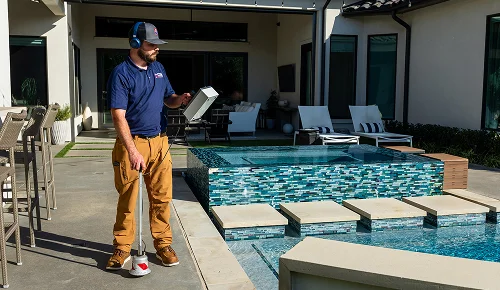 For 50+ years, we’ve developed tools to make leak detection faster and less disruptive.
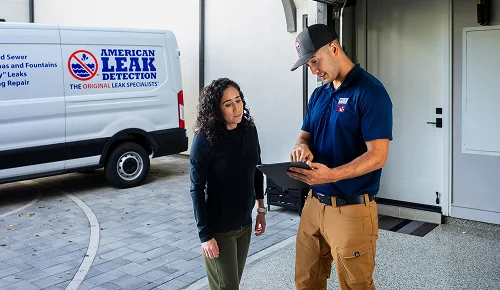 Learn all your options with pros, cons, and costs before making any decisions.
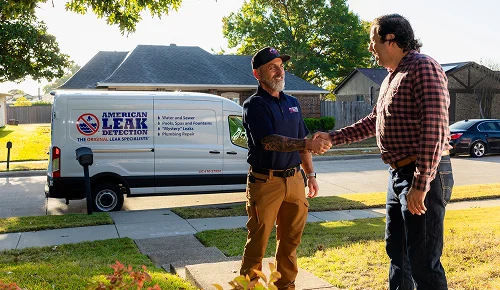 Pre-approved with top insurers means faster claims and smoother coverage.
 Trained specialists who detect leaks in every system, from pools to commercial pipes.


