Plumbing systems in Trenton operate under specific environmental stressors. The combination of aging infrastructure in established neighborhoods and the region's heavy, clay-based soils creates a high-risk environment for underground pipe failure.
- Geological Pressure: New Jersey’s clay soils expand and contract significantly with seasonal moisture changes, putting immense mechanical stress on buried copper and galvanized lines.
- Freeze-Thaw Cycles: The intense temperature swings in Trenton can cause the ground to shift, leading to sheared fittings or pinhole leaks in older slab-on-grade constructions.
- Legacy Infrastructure: Many local homes feature original plumbing that has reached the end of its lifecycle, making them prone to the "pitting" corrosion that precedes a major breach.
Our expertise ensures every hydraulic system on your lot is verified and secure. We provide property-wide protection by integrating specialized services like Sewer Line Leak Repair, Slab Leak Detection, Infrared Leak Detection, and comprehensive Leak Surveys into a single, cohesive diagnostic plan.
Understanding Slab Leak Warning Signs
Many homeowners are unsure when a concern becomes serious enough to call for a professional inspection, especially when most of the plumbing is buried beneath concrete.
- Subtle symptoms like unexplained increases in your water bill, the sound of running water when fixtures are off, or hairline cracks that expand along tile or drywall can all point to movement under the slab.
- Moisture that has no clear source, such as damp spots along baseboards or flooring adjacent to interior walls, may indicate water traveling along the path of least resistance from a hidden leak.
When we arrive at your property, we correlate what you are seeing and hearing indoors with meter readings, surface inspections, and the layout of your plumbing system. This process helps confirm whether your situation is likely tied to a buried line, another building condition, or a combination of both, giving you the context needed to plan your next steps with confidence.
A Data-Driven Protocol for Locating Hidden Failures
Not knowing what is happening beneath your floor can be more stressful than the leak itself. Our diagnostic process is built on technical transparency and logical data collection. We begin by analyzing the history of the water loss (including recent utility statements and meter readings) to choose the most efficient tools for your building’s specific layout.
Our technicians perform a total audit of your plumbing system using pressure testing and electronic line tracing. We "listen" through the concrete using high-sensitivity acoustic sensors to find the distinct frequency of escaping water. This methodical sequence rules out sound sections of the system, ensuring that any eventual access for repair is localized and minimal. This data-driven strategy protects your flooring from unnecessary exploratory holes and high restoration costs.
Here is how our Trenton diagnostic process typically unfolds from start to finish:
- Initial information review: We start by examining your recent water bills, discussing visible symptoms, and reviewing the age and layout of your plumbing to determine whether a targeted slab leak detection service is appropriate.
- System isolation and testing: We then isolate different sections of your water distribution system, perform pressure tests, and use electronic line tracing to map buried piping beneath the slab or foundation.
- Acoustic and thermal scanning: With sensitive listening devices and, when appropriate, thermal tools, we scan the slab surface to locate the precise point where water is escaping under pressure.
- Confirmation and documentation: After narrowing the leak zone, we confirm our findings with multiple readings and document the results in a clear report you can share with your preferred repair professional.
Because slab leaks can mimic other problems like soil settlement or minor surface cracks, we take time to confirm that the pattern of moisture, movement, and meter usage truly points to a buried line failure. By walking you through our findings in clear language, we help you compare the choice of targeted repair against options like partial re-routing or future repiping. This level of detail makes it easier to justify your decisions when discussing long-term plans for your home’s foundation and mechanical systems.
Frequently Asked Questions
How does the Trenton freeze-thaw cycle contribute to slab leaks?
When the ground freezes and thaws, the soil around your foundation shifts. This "ground heave" puts physical pressure on the plumbing lines buried within or beneath the concrete. In older homes with copper piping, this repeated movement can cause the pipes to rub against the concrete or rocks, eventually leading to a friction-based breach or a sheared fitting.
Will you have to jackhammer my entire floor to find the leak?
No. Our priority is a non-invasive audit. We use ultrasonic listening devices that allow us to hear the leak through the slab. This allows us to mark the exact spot where the pipe has failed, meaning any eventual repair requires only a small, targeted opening rather than trenching through your whole living space.
Why is my floor hot if the leak is underground?
If a hot water supply line fails beneath the slab, the escaping water saturates the soil and the concrete above it. Concrete is a conductor of heat, so the thermal energy from the leaking water travels upward, creating a "hot spot" on your flooring. This is a primary indicator of a pressurized hot water line failure.
What information should I have ready for the diagnostic team?
It is helpful to have your most recent water bills to establish a baseline of water loss. Additionally, note if the symptoms change when you use specific fixtures or if the sound of running water is constant. Knowing the location of your main shut-off valve is also vital for immediate damage control.
Secure your foundation before the damage spreads. Call American Leak Detection of South Jersey & Delaware at (856) 238-1911 to request a service call and get a definitive answer on your property’s structural health today.


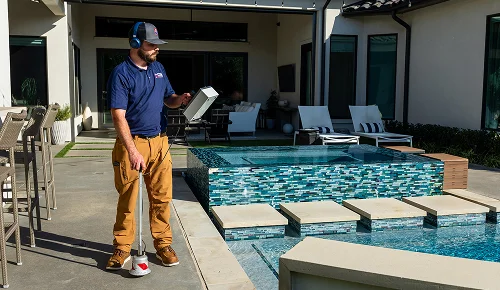 For 50+ years, we’ve developed tools to make leak detection faster and less disruptive.
 Learn all your options with pros, cons, and costs before making any decisions.
 Pre-approved with top insurers means faster claims and smoother coverage.
 Trained specialists who detect leaks in every system, from pools to commercial pipes.


